Arqus Thinkathon: What skills do students need in a fast-changing world?
Arqus
|
20 Jan 2026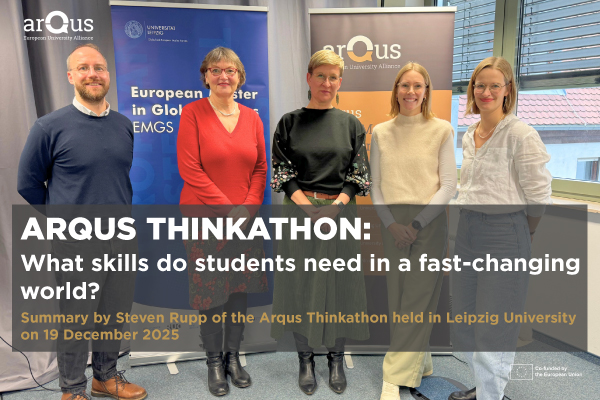
|
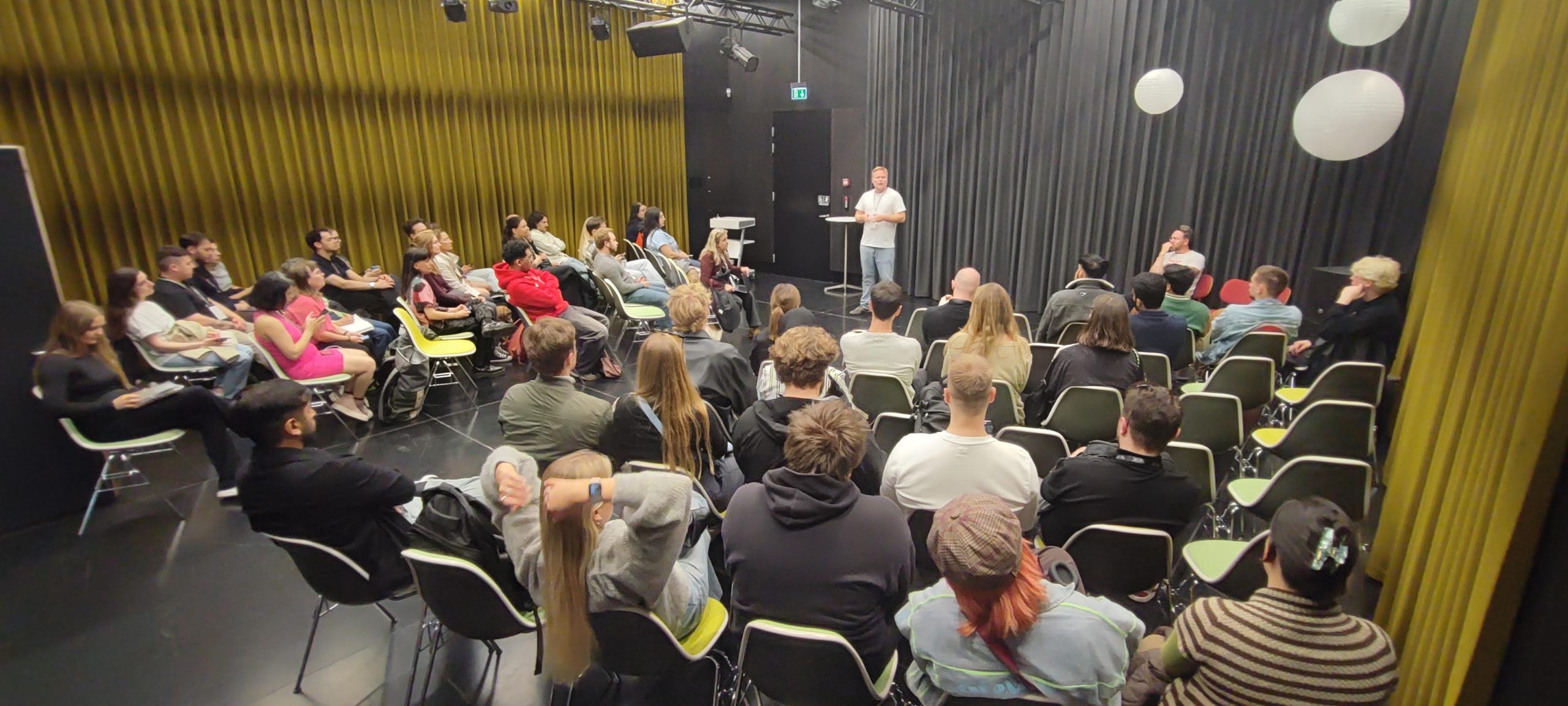
20 Jan 2026During the Arqus Thinkathon at the Global and European Studies Institute at Leipzig University, students of social sciences and humanities discussed key skills for future graduates with experts from academia, politics and international organisations. The aim of the event was to reflect on current challenges, sharpen career prospects and strengthen networks.
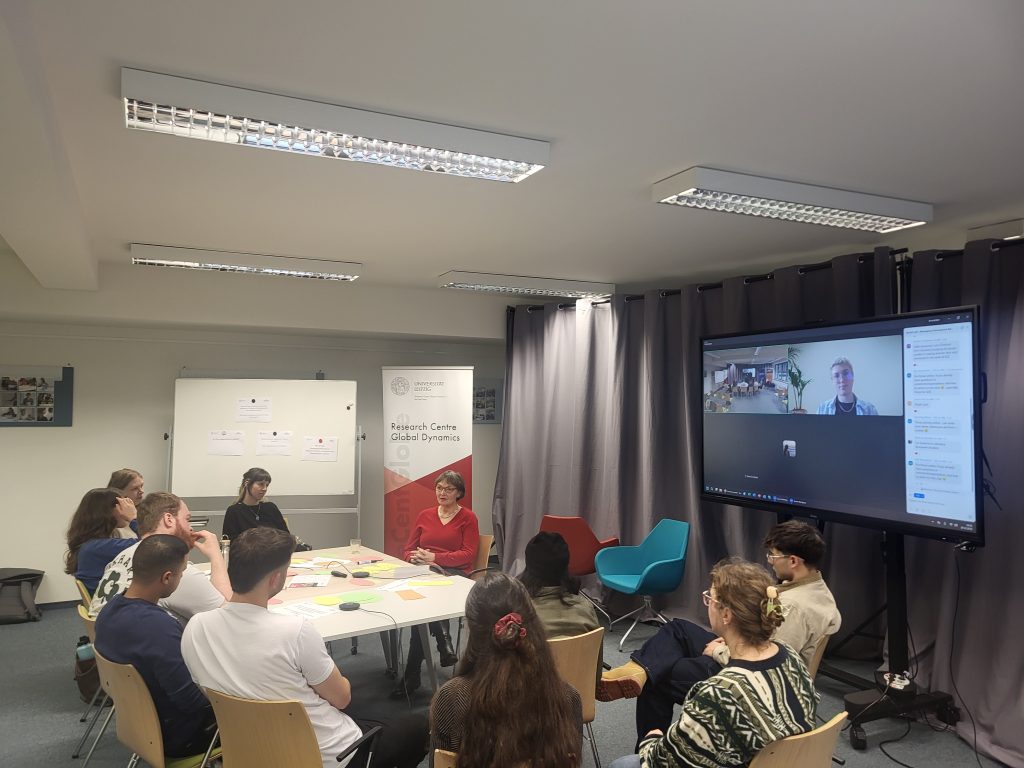
The event, organised as part of the Arqus European University Alliance, kicked off with a keynote speech by Jakob Wöllenstein (Konrad Adenauer Foundation), who gave a vivid account of his work as head of the South Caucasus Political Dialogue Regional Programme and highlighted the practical challenges of international engagement. In the following roundtable discussion, moderated by Dr Steffi Marung (GESI), Pia Lorenz (City of Leipzig), Renata Rat (German Embassy in Sarajevo), Anke Stahl (German Academic Exchange Service – DAAD), Mona Stein (European Commission) and Björn Reichel (Europa-Haus Leipzig) discussed their professional fields of practice and the impact of geopolitical tensions and economic conditions on their work.
Maintaining networks, connecting disciplines, creating visibility
Anke Stahl emphasised the growing importance of international academic exchange in times of global uncertainty. Students and researchers should build bridges, engage in intercultural activities and communicate their research in a way that highlights its social benefits. Central skills, she said, include strategic thinking, communication skills, social orientation and networking skills. Renata Rat and Mona Stein, both alumni of the international Master’s programme in Global Studies, also emphasised the importance of interdisciplinary thinking and a multi-perspective approach to global challenges. As Dr Marung summarised, all these challenges are highlighted and addressed by bringing people together, which takes on new significance in today’s world. This brings the role of research and narration to the fore, as interdisciplinarity and translation become key competencies for overcoming crises and uncertainties.
In the afternoon, participants explored the issues raised in six World Cafés on career prospects in science, business, media, civil society, international organisations and EU structures.
The Arqus Thinkathon in Leipzig clearly demonstrated the skills that students need to develop today: intercultural, communicative and strategic skills, as well as interdisciplinary thinking and creative drive. The event also highlighted how Arqus universities combine national perspectives with the strategic requirements of the EU and prepare students specifically for Europe’s role as a global player.
The keynote speech and roundtable discussion were funded by the DAAD with funds from the German Federal Ministry of Research, Technology and Space.
An article by Steven Rupp