The Arqus Communication officers and community manager share their thoughts and experiences at the EDUC Staff training week at Kongsberg
Arqus
|
09 Dec 2025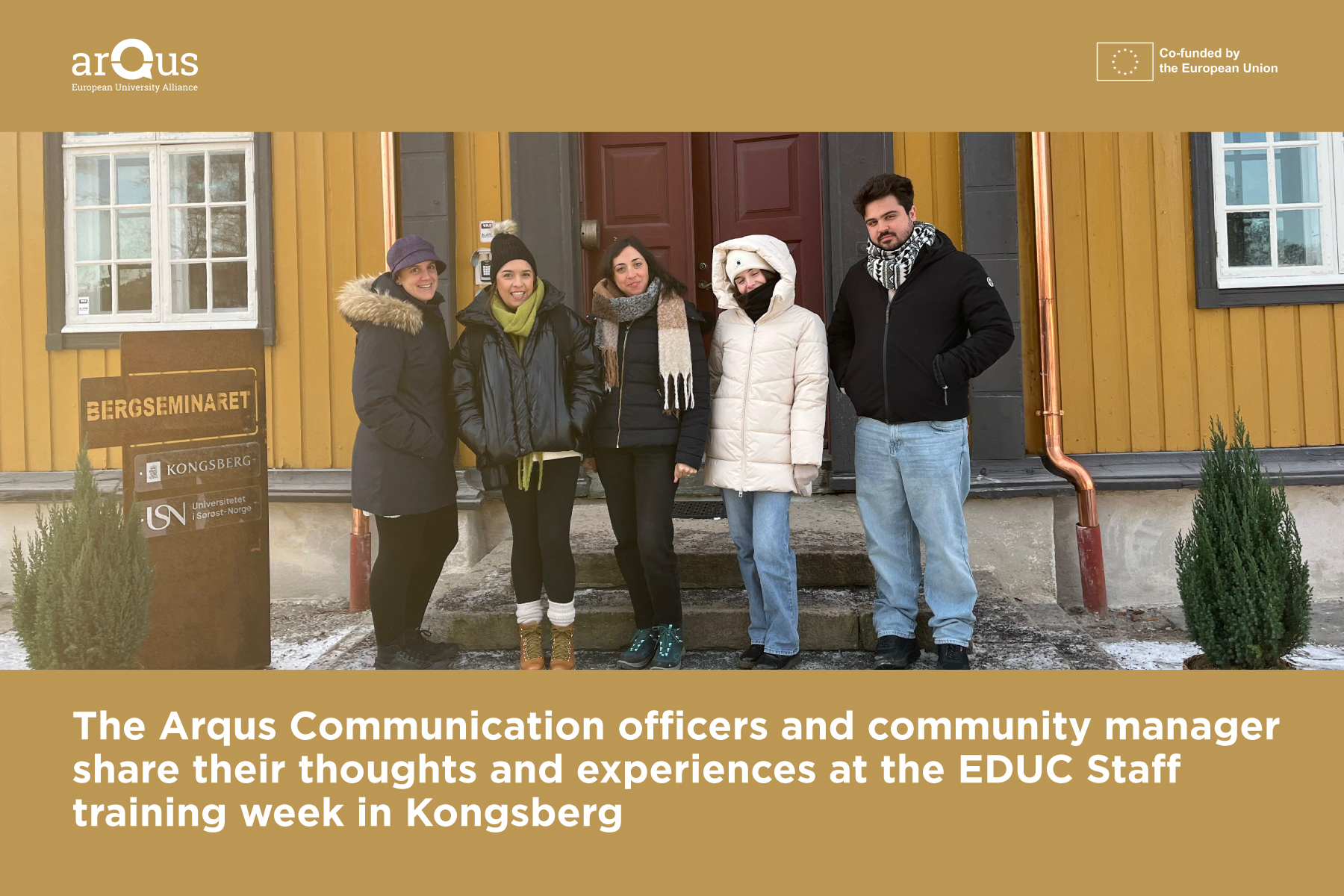
|
09 Dec 2025Between 25 and 27 November, some members of the Arqus Communications team travelled to Kongsberg, Norway, to take part in the EDUC Staff Training: Community Building at the European Universities. As a result of this experience, the team wrote a chronicle highlighting some of the trip’s highlights.
When we signed up for the EDUC Staff Training Week at the University of South-Eastern Norway (USN), we knew we would be discussing community engagement. What we did not know was that we would dive so deeply into Norwegian life and the unique culture of Kongsberg– complete with a roaring miners’ train, starry-snowy hikes, a few near-acrobatic walks on ice, and more warmth—both literal and metaphorical—than we ever expected from late November in Norway.
This is how the four of us from the Arqus Communications team —Giulia, Gloria, José and Sofia, each representing a different university and the communications team— came to have such an extraordinary experience.
We reached Kongsberg directly from a short stay in Oslo, arriving with just enough time to check in and join the informal welcome dinner. The kitchen had technically just closed, but the staff produced food anyway—our first taste of the kindness that would set the mood for the week.
The room was already buzzing. Some participants had been at last year’s staff week in Hungary, so the first hour was essentially a cheerful mix of “You again!” and “Tell me everything since 2024.”
We started with a warm welcome from the USN international relations and communications teams. Knut Jul Meland, EDUC Community Manager, had already exchanged emails with everyone and had met some of us last year. For those meeting him for the first time, it was nice to put a face to the person who had always kindly answered our questions and queries about the days we would be spending in Norway. After the first round of introductions, there was a lively icebreaker activity (the kind where we pretend we don’t mind talking before coffee). But the only ice we broke was within those four walls where the staff week took place. Outside that building, the freezing temperatures surprised us and set the scene for our future adventures.
The morning presentations gave us a tour of USN’s ecosystem: strong links with industry, local businesses and public services such as EURES. With these presentations, we realised that the city of Kongsberg, as well as the building we were in, had a lot of history. Being a culturally rich city, Kongsberg stands out for its military production, particularly now with the war in Ukraine.
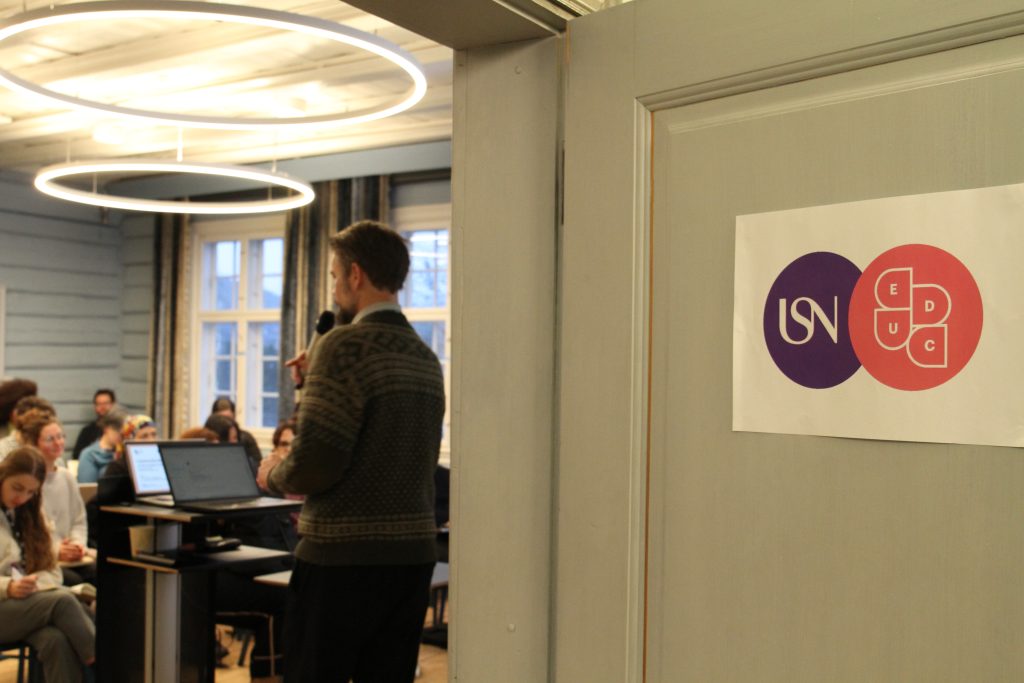
Photo by EDUC Alliance
The EDUC Alliance, like all alliances present, seeks a way to better connect the university with society. To this end, Kongsberg has sought to follow a relational model between academia, government, industry and the community. Even if Norway’s context is unique, many ideas felt transferable. At one point, Giulia, University of Padua communications officer, caught herself thinking:
“If European Alliances could one day act as true cross-border bridges between skilled graduates and companies, that would really be an achievement!”
The afternoon World Café deepened the discussion. Rotating among tables meant hearing perspectives from students, staff and community partners. It was a fast, colourful snapshot of engagement across Europe.
Evening – Into the silver mines
Nothing prepared us for the miners’ train. Imagine a small metal wagon rattling through a tunnel far too narrow for comfort—an experience that makes you wonder whether you are entering a cultural activity or the Mines of Moria. The only thing missing was someone shouting, “Speak, friend and enter.”
But once underground—342 metres below the surface—we stepped into a candlelit dining hall worthy of a Dwarven kingdom: long wooden tables, flickering light, and a traditional Norwegian dinner that felt very much like a feast that even Gimli himself would have approved of. Surreal, a little spooky, and surprisingly cosy.
The morning session focused on the student engagement model developed by EDUC, which we found particularly engaging. What truly stood out were the student ambassadors themselves: they spoke with an authenticity and enthusiasm that no chart or strategy slide can replicate. It was a powerful reminder that, if we want to reach students, we need students to speak to them.
Their approach showed how effective peer-to-peer communication can be—whether through ambassadors, short videos, or content created directly by students for students. This inspired us to strengthen the role of students in our community strategy: giving them not just a place in our activities, but a voice that helps shape how we communicate about them.
Then it was our turn: we held a joint session with colleagues from four Arqus universities where we shared best practices and discussed common challenges.
“Having the opportunity to share best practices within the Alliances made me feel like I was part of a broader community, all working together to reshape higher education,” thought José Manuel, the Arqus Community Manager.
We presented the Alliance and explained how the Communications team works, both internally and externally, as well as how the Coordination team and each local communications officer operate. We shared examples of materials and deliverables produced by the central communications team, outlined our social media strategy, and highlighted the main achievements of each local officer in terms of successful activities for students and staff. We concluded the presentation by opening a discussion with participants about our doubts, frustrations and challenges, creating space for exchange, feedback and inspiration.
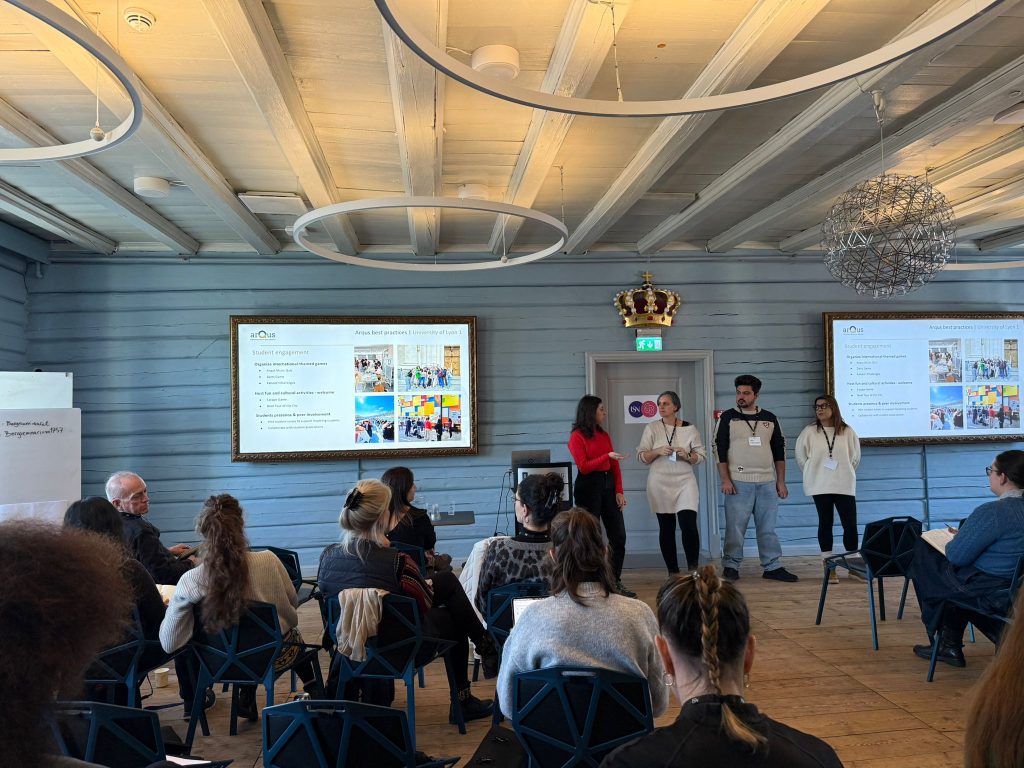
We had an open discussion about what works and what still feels experimental. Participants said they appreciated the transparency, which is always encouraging. The feedback also highlighted our teamwork, the way we complement each other and work seamlessly together. This served as a strong reminder that this approach is a real strength for our alliance and our Communications team. Our main goal was to learn from everyone’s experience, but we were also there to share.
“Sharing our challenges and teamwork failures and successes made me realise how powerful honest dialogue can be – we were there to share but overall to learn from each other.” thought Sofia, communications officer from the University of Minho.
The afternoon workshop revisited similar topics, but the mixed groups sparked new reflections. A standout moment was when colleagues from EUTOPIA offered sharp, forward-thinking insights that left many of us in my group scribbling notes.
The day began with FOREU4ALL’s presentation on alliance collaboration—a structured reminder of the broader ecosystem we belong to. But the session that truly captivated everyone was Armando Uribe Echeverría’s talk on the future of communication in European University Alliances. For 45 minutes, no one moved or checked emails. He envisioned 2035 alliances not as time-limited projects but as central meta-organisations in Europe’s higher education ecosystem.
What struck us most was his idea that communication will shift from a “support work package” to a core strategic function, promoting democracy and trust, strengthening resilience against disinformation, and bridging the gap between researchers, policymakers and society. Communication teams would become multidisciplinary hubs, with expertise in AI, crisis management, UX design and ecosystem convening. He also called for journey-centred, co-creative engagement—moving from “we publish, you read” to “we build this experience together.”
We all left buzzing with ideas, inspired and slightly overwhelmed.
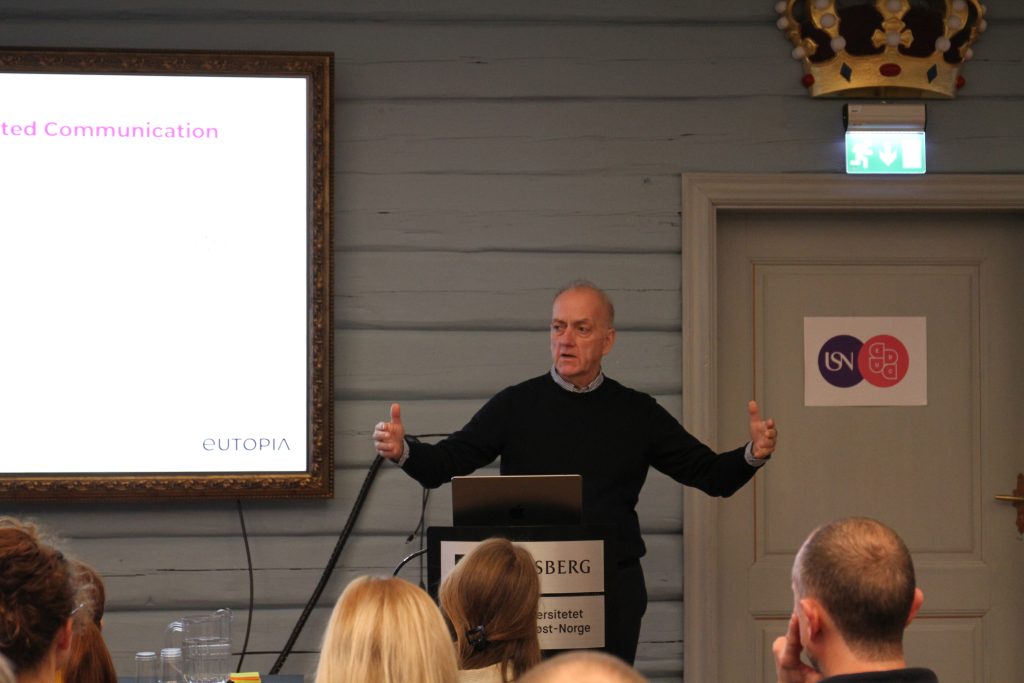
Photo by EDUC Alliance
Afterwards, we toured USN’s labs, including the carbon-fibre workshop, seeing everything from Paralympic ski seats to drones—all made from recycled materials. Innovation, sustainability and craftsmanship in one place.
This week in Kongsberg was more than a training programme—it was a blend of learning, dialogue and lived experience. We returned home inspired, with new ideas, strengthened connections, and a reassuring sense that European cooperation is alive, evolving and full of potential.
“I strongly recommend everyone to go for this kind of staff week, especially as a communications officer. It is crucial to connect with people and understand communities when working in communications. In Norway, I gained hands-on insights into community building, connected with inspiring colleagues, experienced the local culture and explored stunning landscapes. It was a mix of learning, laughter and memories I will carry forward.” Stated Gloria, University of Lyon 1 communications officer.
But beyond the memories, the laughter, the surprises and the cold dips, this week also left us with a set of clear takeaways that we want to bring back into our work:
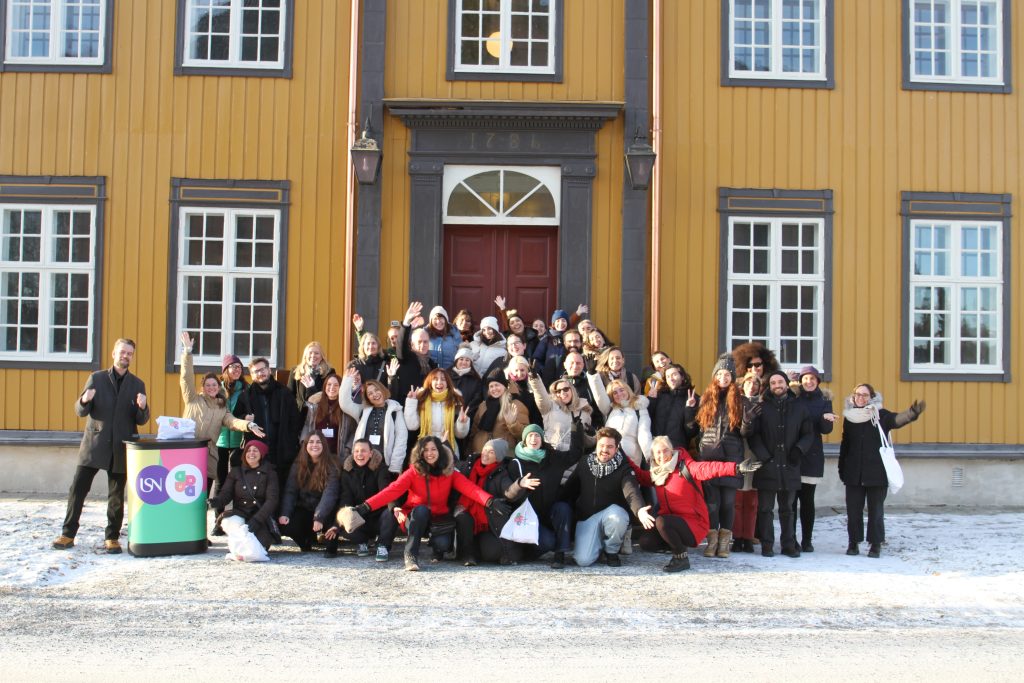
Photo by EDUC Alliance