Participate in the summer school of the University of Padua: “Sensing time: How we process time across real and extended realities”
Arqus
|
04 Mar 2026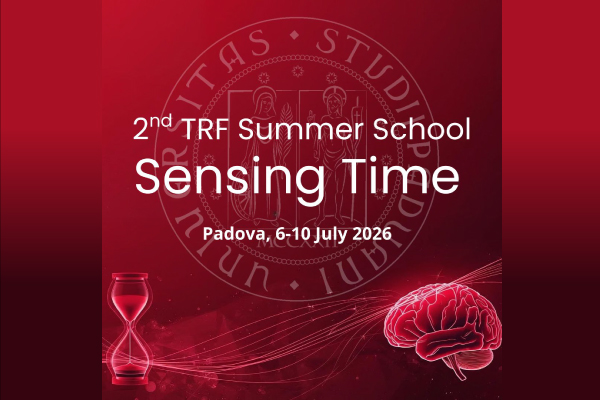
|
04 Mar 2026From 6 to 10 July 2026, the second Timing Research Forum (TRF) summer school “Sensing time: How we process time across real and extended realities” will bring together students and researchers at the University of Padua.
The initiative is organised within the framework of the Shaping a World-class programme of the University of Padua in collaboration with TRF, further strengthening academic exchange within Arqus.
Hosted by the Department of General Psychology, the summer school will offer an intensive and interdisciplinary exploration of one of the human mind’s most fascinating mysteries: how we experience the passage of time.
A week at the intersection of psychology, neuroscience and technology
Throughout the week, participants will examine the time perception from multiple perspectives: psychology, neuroscience and cutting-edge technological approaches. The programme combines keynote lectures by internationally renowned scholars with practical workshops, poster sessions and group activities.
Keynote speakers include:
Participants will also also attend specialised talks by Alice Teghil, Fiorella del Popolo Cristaldi, Mariagrazia Capizzi, Antonino Visalli, Pom Charras and Luigi Micillo, among others.
Hands-on research training
A core feature of the summer school is its strong practical component. Over four days, attendees will engage in four-hour daily hands-on sessions, gaining direct experience with advanced research tools and methodologies used in cognitive science laboratories.
Training covers:
These sessions will allow participants not only to understand the theoretical foundations of each method but also to collect, process and interpret real data, strengthening both their scientific and technical skill sets.
Academic excellence and intercultural exchange
Designed particularly for Master’s students and early-stage PhD researchers aiming to advance in cognitive sciences, the summer school will also emphasise the development of cross-disciplinary competences such as teamwork, critical thinking and intercultural collaboration.
Beyond the academic programme, participants will enjoy a guided visit to two of Padova’s most iconic landmarks: the historic Palazzo del Bo and the Orto Botanico di Padova, a UNESCO World Heritage Site. The week will conclude with group presentations, a social dinner and closing aperitivo, fostering networking and community-building among young researchers from across Europe.
Arqus benefits and participation
The programme will be recognised with 3 ECTS credits. The registration fee is set at €500, with a 50% fee waiver available for students from Arqus universities (Granada, Graz, Leipzig, Lyon 1, Maynooth, Minho, Padua, Vilnius and Wrocław), reinforcing Arqus’ commitment to inclusive mobility and academic collaboration.
The fee covers lectures and course materials, Wi-Fi and coffee breaks, light lunches, a welcome cocktail, a guided city tour and a social dinner.
For further information, interested students can contact sensingtime2026@gmail.com or summerschool@unipd.it, or visit the summer school’s dedicated website.