University of Granada Botanical Garden receives delegation from Wrocław University
Arqus
|
05 May 2026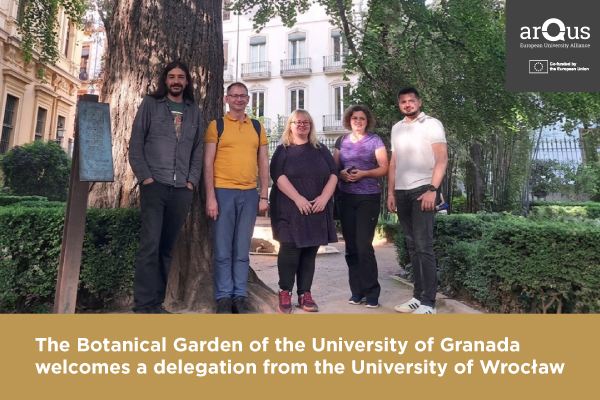
|
05 May 2026From 27 to 30 April, the Botanical Garden of the University of Granada hosted a delegation from the Botanical Garden of the University of Wrocław (Poland) as part of an initiative promoted by the Arqus European University Alliance. The visit aimed to strengthen institutional ties and explore future avenues for collaboration between the two botanical gardens.
During their stay in Granada, members of the Polish botanical garden took part in guided tours of the University of Granada Botanical Garden and the Sierra Nevada mountain range, in order to learn about the local flora as well as the conservation and management strategies implemented in these areas. The programme also included several working meetings focused on the exchange of experiences and best practices in the fields of botany and education.
As part of the visit, a collaboration agreement was signed between the two botanical gardens, laying the foundations for future joint initiatives, particularly in the area of student exchange.
The Botanical Garden of the University of Granada was built in 1850 next to the former Colegio de San Pablo, now the Faculty of Law, and is one of the institution’s main heritage assets. It has two distinctive features that explain its scientific and historical relevance: on the one hand, the diversity of plant species resulting from its continuous use as a space for research and scientific experimentation; on the other, the preservation of its original 19th-century layout and plant organization.
Its creation stems from a Pragmatic Sanction issued by Charles III, which established the need to found botanical gardens with the aim of studying the properties of plants and generating scientific knowledge. In Granada, this vision was implemented through what was known as the Botanical School, a system for classifying and arranging species according to the standards of the time and the manuals used by students. This allowed visitors to walk through the garden and study it in direct connection with the content taught in the classrooms.
The space was originally arranged using small plants placed in pots. Today, it combines specimens grown in pots and those planted directly in the ground, while preserving the historical layout; in the latter case, careful control of plant growth makes it possible to maintain the same number of specimens as were originally planted.
Guillermo Benítez Cruz – gbcruz@ugr.es
Director of the Botanical Garden of the University of Granada
This article was originally published on the University of Granada’s communications office website and received coverage in the city’s local press.