The Open Science Ambassador Network meets in Maynooth
Arqus
|
26 Mar 2026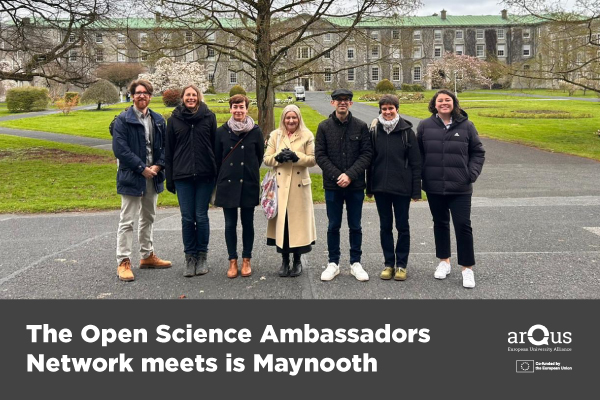
|
26 Mar 2026The Open Science Ambassador Network Workshop Days were held at Maynooth University on 23 and 24 March 2026. This event, funded by the Arqus Innovation Fund, allowed different members of the Open Science Ambassador Network Community of Practice (CoP) to meet face-to-face and define the next steps.
The event was organised at Maynooth University by Erivelton Nepomuceno. It brought together participants from across the Arqus Alliance, including Pablo García (University of Granada), Isabel Celeste Fonseca (University of Minho), Hildrun Walter (University of Graz), Gaëlle Leroux (Lyon 1 University), Ilona Lipp (Leipzig University), Vincas Grigas (Vilnius University), Stefan Hohenegger (Lyon 1 University), Micaela Aguiar (guest member, University of Porto) and Thalita Nazaré (Maynooth University).
During the event, the group explored a range of topics connected to Open Science and agreed on some practical next steps for the work ahead. This included setting out how the Community of Practice will move forward and identifying key areas to be developed in more detail, including the organisation of webinars, the sharing of relevant materials, and the continuation of the Arqus Open Science Award through a second edition.
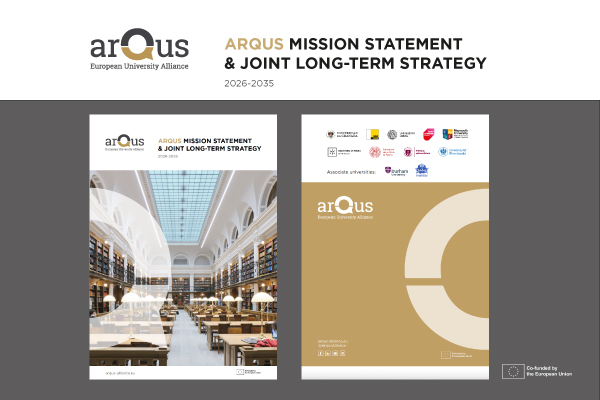
These discussions were also closely aligned with the Arqus Mission Statement & Joint Long-Term Strategy 2026 to 2035, which describes Arqus as an alliance of leading European research universities committed to excellence in research based on the principles of Open Science, while also contributing to major societal challenges in Europe and beyond.
The event also provided space to look more closely at some of the main activities and discussions developed across the two days.
These discussions revealed common challenges and opportunities, emphasizing recent advancements and future directions. Key areas for continued progress include fostering positive evaluation frameworks for open science, providing guidance on legal requirements and regulations for the secure sharing of research outputs, allocating human resources to support openness, and implementing policies to further encourage open science adoption.
As part of our programme in Maynooth, we also hosted a public talk with members of the Open Science Ambassador Network. The event opened with a welcome from Mr Ben Finnegan of the MU Arqus Management Team, who greeted the ambassadors, introduced the work of Arqus at Maynooth University, and highlighted the value of this network for encouraging collaboration and open research practices.
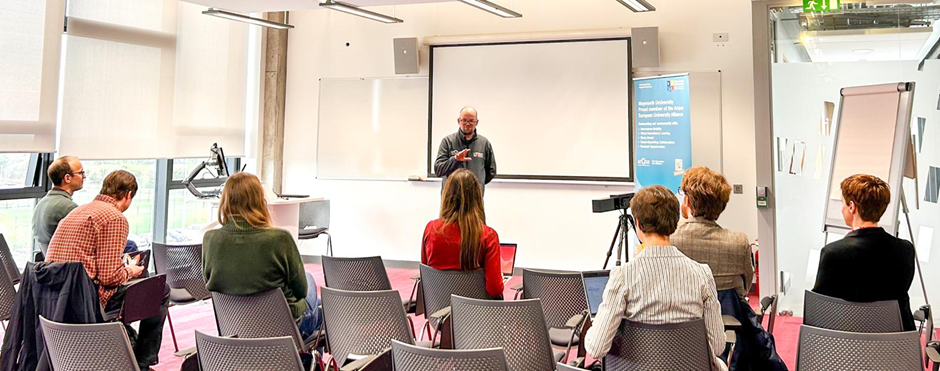
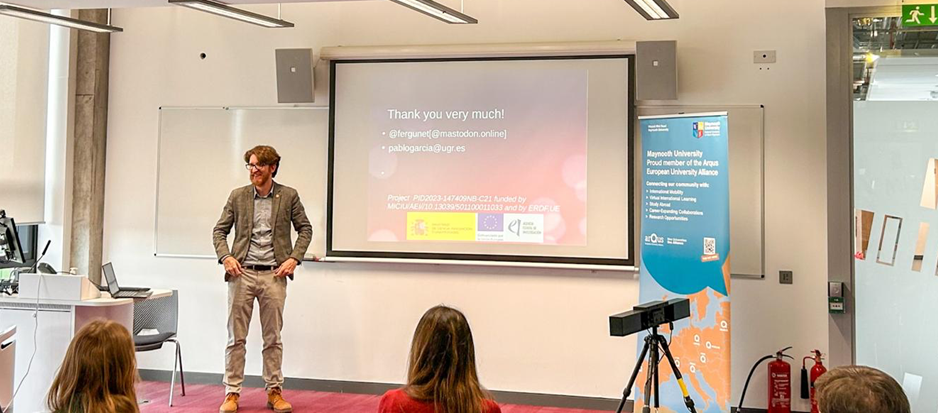
The first talk was given by Pablo García (University of Granada), who presented on licences in a session he described as “How I learned to stop worrying and love the code”. His talk was a useful opportunity to further explore the idea of Open Science and the different areas connected to it. He also discussed the difference between Free Software and Open Source, introduced the main types of licences that can be applied to research outputs, and explained why it is important to understand these processes when sharing files and materials related to our work.
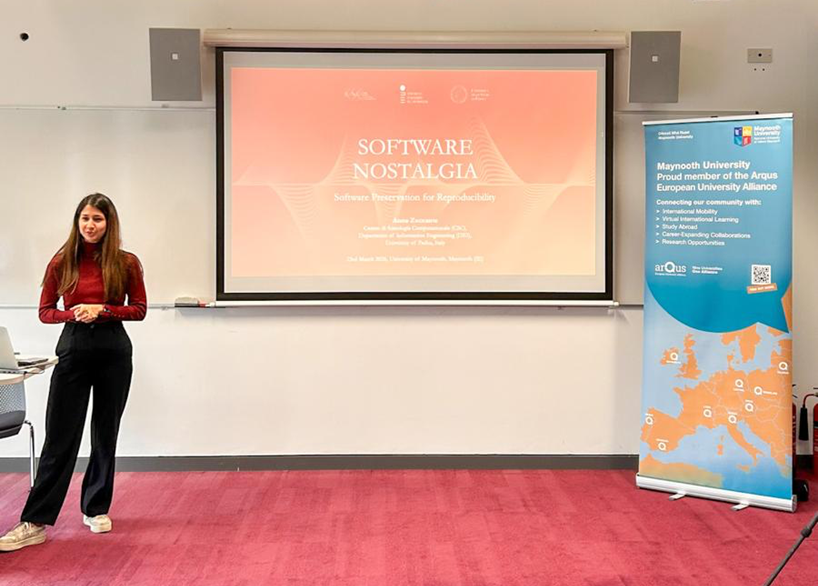
We then had a presentation from PhD student Anna Zuccante (University of Padua) titled “Software nostalgia: Software preservation for reproducibility”. She spoke about the importance of cultivating and archiving software on public platforms to maintain sustainable access to code and software over time. As part of this discussion, she presented the idea of using machine learning to support software preservation, helping to maximise existing documentation efforts while also reducing the amount of manual work involved.
We also had a short contribution from Dr Dermot Lynott of Maynooth University, who initiated the Irish Reproducibility Network. He introduced the network’s website and spoke about some of the initiatives it is developing to support reproducibility in research across Ireland.
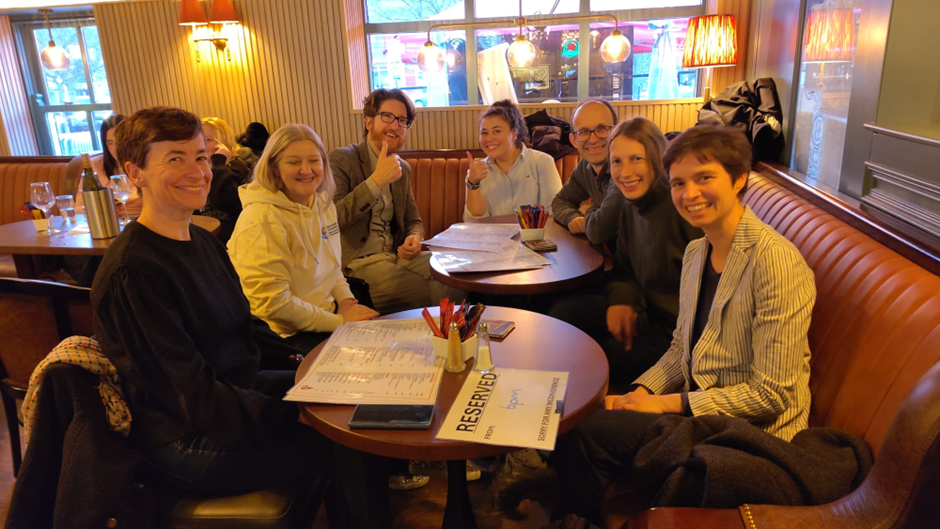
Of course, the ambassadors also had the chance to experience a little of local life in Maynooth, including a visit to a traditional Irish pub. It was a nice way to end the day in a more relaxed setting and gave everyone time to continue conversations informally and enjoy the friendly atmosphere of the town.
Article written by the Open Science Ambassador Network