
ISLYE Exchange Programme – Braga and Guimarães
If you are interested in Portugal/the Portuguese market, we invite you to Braga and Guimarães!
About the Location
Braga
Braga is one of the youngest cities in Europe (considered the youngest city in Europe in 1989), making it a dynamic and energetic city. In the past 30 years, the district’s population has grown by over 25%. The district of Braga shows development and quality of life standards quite above the national average, only surpassed by the regions of Greater Porto and Greater Lisbon. Through ratios and statistics, this is an obvious fact. Allied with that is its strategic geographical position and its development which make this Portuguese district one of the most appealing regions for investment.
Braga also offers unique cultural and leisure opportunities in the country, with its nightlife, cinemas, theatres, exhibitions, museums and art galleries. It is a city full of culture and traditions, where history and religion coexist side by side with the technology industry and academic life.
Braga is one of the oldest Portuguese cities, as well as one of the oldest Christian cities in the world. It was founded in Roman times, under the name of Bracara Augusta and, today, it boasts 2000 years of history as a city. Located in the north of Portugal, in the Cávado Valley, Braga has roughly 174 thousand inhabitants. It is the centre of the Great Metropolitan Area of Minho (GAM), totalling about 800 thousand inhabitants.
When Portugal as a country was constituted, Braga was its only city. Braga is one of the oldest Portuguese cities, founded in Roman times, under the name of Bracara Augusta. It boasts 2000 years of history as a city. It is also one of the oldest Christian cities in the world. Remains of settlement in Braga date back thousands of years, certified as belonging to the Bronze Age.
Thus, the history of Braga can be divided in three periods: pre-history, Bracara Augusta and Braga.
Guimarães
Guimarães is a Portuguese city located in the district of Braga, in the northern and sub-region of Ave (one of the most industrialised sub-regions in the country). It has a population of 52 182 inhabitants, spread through an urban area of 23,5 km², in 20 parishes. It has a population density of 223,9 inhabitants per km². It is the centre of a municipality with 242,85 km² and 162 572 inhabitants (according to 2006 statistics), sub-divided into 69 parishes. Most of the population reside in the city and its suburbs. The municipality is bordered, in the north, by Póvoa de Lanhoso; in the east, by Fafe; in the south by Felgueiras, Vizela and Santo Tirso; in the west by Vila Nova de Famalicão and in the north-west by Braga.
It is a historical city, which played a crucial part in the foundation of Portugal as a country. Guimarães has existed for a millennium since it was founded, known then as Vimaranes.
Guimarães is one of the most important historical cities in the country. The city centre was considered a Cultural Heritage of Humanity, making it one of the biggest tourism centres in the region. Its streets and monuments breathe history and charm visitors.
Guimarães has known how to best reconcile history and heritage conservation with the dynamics and entrepreneurship, traits of a contemporary city.
It is often named as the “Cradle-City”, due to the fact that it was here that the administrative centre of the County of Portugal (Condado Portucalense) was founded by D. Henrique. His son, D. Afonso Henriques is thought to have been born in Guimarães. Another historical event of importance was the Battle of São Mamede, which happened outside the city on the 24th of June 1128, an event that helped shape the concept of Portuguese nationality. However, the Reconquista and the need to protect territories further south led to moving the administrative centre to Coimbra, in 1129.
The “Vimaranenses” [denonym for those who come from Guimarães] are the fruit of this historical conquest that began, precisely, in Guimarães.
The University of Minho
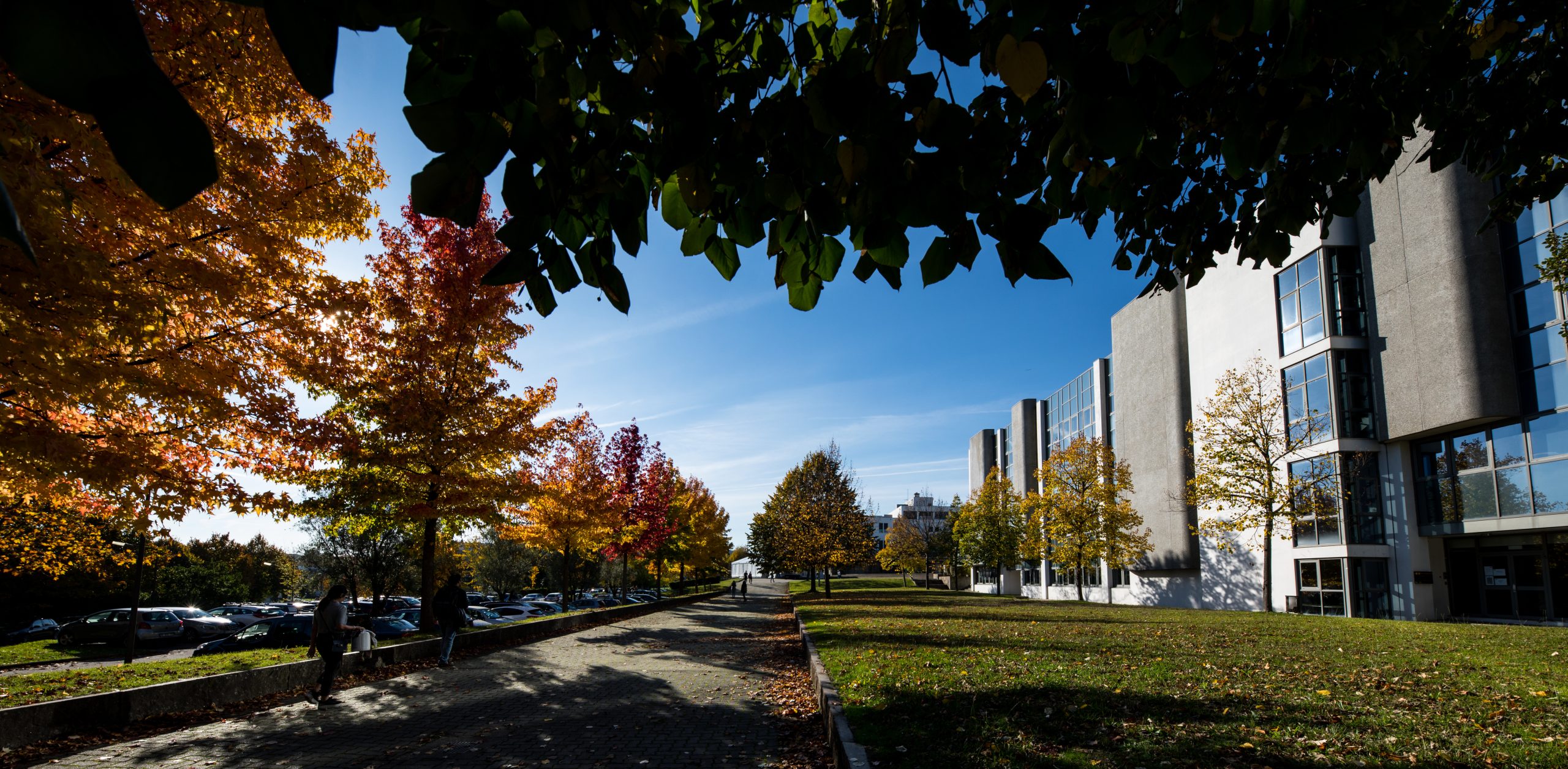
The University of Minho (UMinho) is a public foundation governed by private law and it is one of the most prestigious Portuguese higher education institutions. The (UMinho) was founded in 1973 and it has three campi, one in the city of Braga (Gualtar) and two in the city of Guimarães (Azurém and Couros). UMinho is a comprehensive university with 12 Schools and Institutes that cover the vast majority of scientific fields of knowledge. These Schools and Institutes are responsible for 60 undergraduate programmes and integrated masters, 110 master programmes and 60 PhD programmes. UMinho has more than 600 ongoing research projects. These projects fall within the framework of 30 research centres, 9 associated laboratories, 11 collaborative laboratories and 5 innovation centres and 50 spin-offs.
UMinho registers 30 patents/year. UMinho is also strongly committed with the development of society through many partnerships (with municipalities, schools or companies) and its direct participation in the governance of 58 associations and foundations in social, economic and cultural domains. The University promotes 500 cultural events/year and has its own orchestra. Internationalisation is another key area of activity. Around 400 UMinho students per year take a period to study abroad and around 600 foreign students come to UMinho, Master and PhD Programme in association; mobility in and out of students; Scientif cooperation signed with universities worldwide, comprising 90 different countries (in Europe, USA, Latin America, China and East Asia). In the Shanghai Ranking (ARWU) 2023, Universidade do Minho is among the top 500 higher education institutions worldwide. UMinho was acknowledge as the European Most Active University in Sports in 2018.
Business incubation and space leasing
Business incubation is a strategic tool for economic development, designed to accelerate the growth and success of emerging businesses by providing access to resources, specialised services, and an environment conducive to innovation.
UMinho plays an active role in transforming ideas and talents into sustainable business opportunities. It fosters the creation of startups and spin-offs, offering its campus as a dynamic space for the growth of new business projects.
With an integrated approach, UMinho provides support at all stages of the process, from pre-incubation, through on-site and virtual incubation, to post-incubation, ensuring the necessary support for businesses to thrive and achieve their objectives.
UMinho Entrepreneurship Programme
The UMinho Entrepreneurship Programme is developed annually by TecMinho, the interface of the University of Minho, whose mission is to enhance the transfer of knowledge to the business sector and other economic and social actors, contributing to innovation, entrepreneurship, and the development of skills within organisations and individuals..
Cultural Entrepreneurial Axis
START@TecMinho – An Entrepreneurship Office that provides information about available support for entrepreneurs and guides them in taking their first steps towards creating their own business.
Open Classes/Talks – By invitation, these sessions are aimed at students from primary, secondary, and tertiary education, and are designed to foster direct contact with entrepreneurship specialists.
SpinUM – Held in December, this annual event awards the most innovative business ideas with the greatest commercial potential, generated within UMinho.
Support for Entrepreneurs Axis
IgniLab – A Business Idea Ignition Programme that assists entrepreneurs in transforming their ideas into viable business models.
TEC+ Technology Acceleration Programme – Enhances the skills of UMinho researchers in key areas of technology valorisation and acceleration.
IdeaLab – Business Ideas Laboratory, supports the development and planning of innovative business ideas through formative workshops and personalised business coaching.
Business Laboratory – Supports the development and planning of innovative business ideas through the preparation of business plans and the establishment of companies.
Support for Businesses Axis
Spin-off Programme – The UMinho Spin-off brand is awarded to business projects that commercially exploit the R&D results of UMinho.
InvestMatch – Held annually, this programme leverages business ideas seeking investment and promotes networking.
Spin-off Meeting – Held annually, this event encourages the sharing of experiences among the spin-offs of the University of Minho.
Connection to Society Axis
Collaboration with Municipalities and Incubators – We collaborate with various municipalities and incubators to enhance services and benefits for the entrepreneurial community of UMinho.
Partnerships with Investors – We actively respond to requests from investors seeking investment opportunities within the UMinho Community.
Collaboration with Facilitating Entities – We maintain a strategic collaboration with various stakeholders who play an important role in supporting entrepreneurs and businesses.
UMinho also has a network of UMinho Mentors, consisting of entrepreneurs, consultants, and professionals with experience and know-how, who provide support to new entrepreneurs in the university ecosystem.
Spin-offs UMinho
See https://inovacao.uminho.pt/PortInov/web/spinoffs/?lang=en#/
Contact
Carla Rocha: carla@dps.uminho.pt
Sofia Gomes: sofia.gomes@reitoria.uminho.pt
Arqus UMinho: arqus@uminho.pt