Heritage, landscape and identity: Arqus students explore Europe’s contested pasts in Vilnius
Arqus
|
25 Jun 2026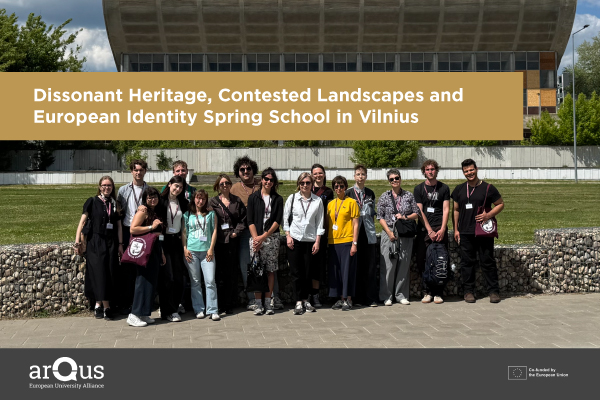
|
25 Jun 2026What makes cultural heritage dissonant? Who decides which traces of the past remain visible and which disappear? These were the questions at the heart of the Spring School “Dissonant Heritage, Contested Landscapes and European Identity”, held from 1 to 4 June at Vilnius University. Thirty students and doctoral researchers from six Arqus partner universities spent four intensive days exploring how Europe’s contested pasts are written into its landscapes – and what that means for how we understand European identity today.
Organised by the European Identity & Heritage Living Lab, led by Prof Marija Drėmaitė (Vilnius), Dr Steffi Marung and Dr Janine Kläge (both Leipzig), the Spring School brought together Master’s and PhD students from Leipzig, Maynooth, Minho, Padua, Vilnius and Wrocław. The group spanned disciplines – from art history and cultural studies to political science and urban and mobility research – and with them came an equally wide range of academic perspectives and personal backgrounds.
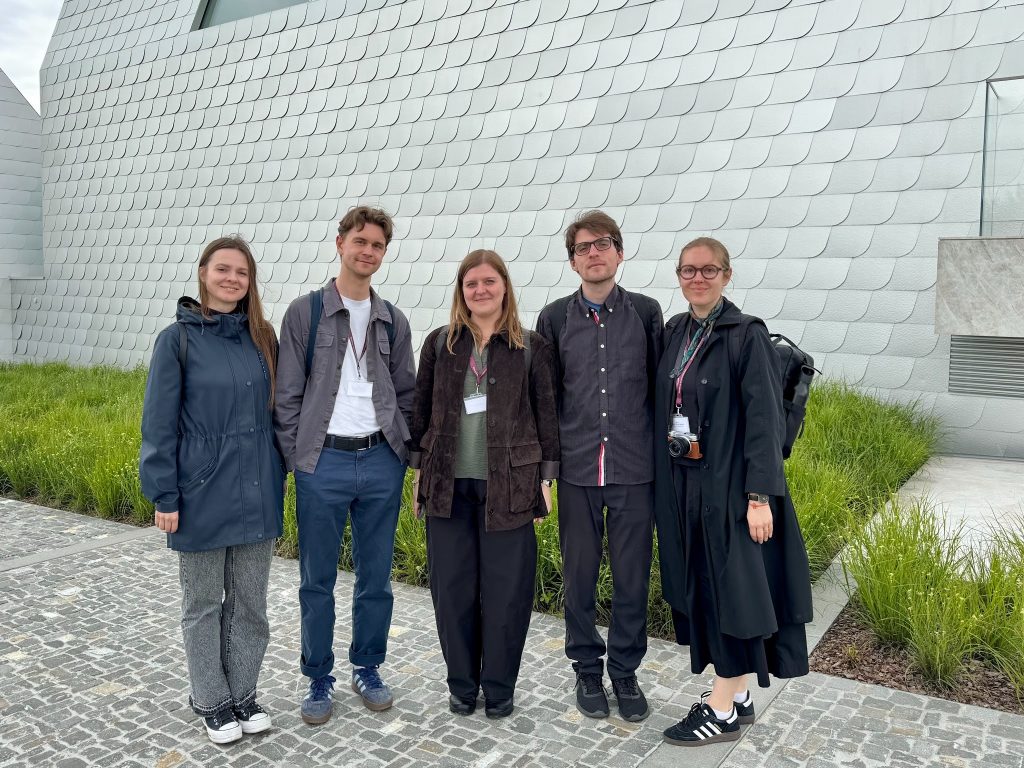
“Bringing together students from different backgrounds helps to avoid one-sided interpretations shaped by personal biases or historical traumas and encourages critical thinking, open discussion, and more balanced decision-making regarding the future of heritage sites.We found this international exchange of perspectives truly inspiring.” – Four participants from Vilnius and Ineta Šuopytė-Butkienė (right), part of the teaching team from PAScapes.
The intensive programme was hosted and organised by Vilnius University’s Faculty of History and its (Post)Authoritarian Landscapes Research Centre (PAScapes). However, Vilnius itself was more than a backdrop. As a city that experienced both the Holocaust and decades of socialist rule in the twentieth century, it offered a living laboratory for everything the Spring School set out to examine.
The programme unfolded across three thematic days. The first addressed dissonant heritage at universities: Prof. Giuliana Tomasella (Padua) examined how universities navigate their own troubled legacies while Prof. David Martín López (Granada) traced the Iberian dictatorships’ footprint in Spanish and Portuguese cityscapes and their colonial heritage. The second day turned to socialist built landscapes, anchored by a keynote from Prof. Arnold Bartetzky (Leipzig) on how socialist architectural heritage is perceived, transformed and contested across Central and Eastern Europe. The afternoon took participants directly into the field: to Lazdynai, Vilnius’s landmark socialist housing district.
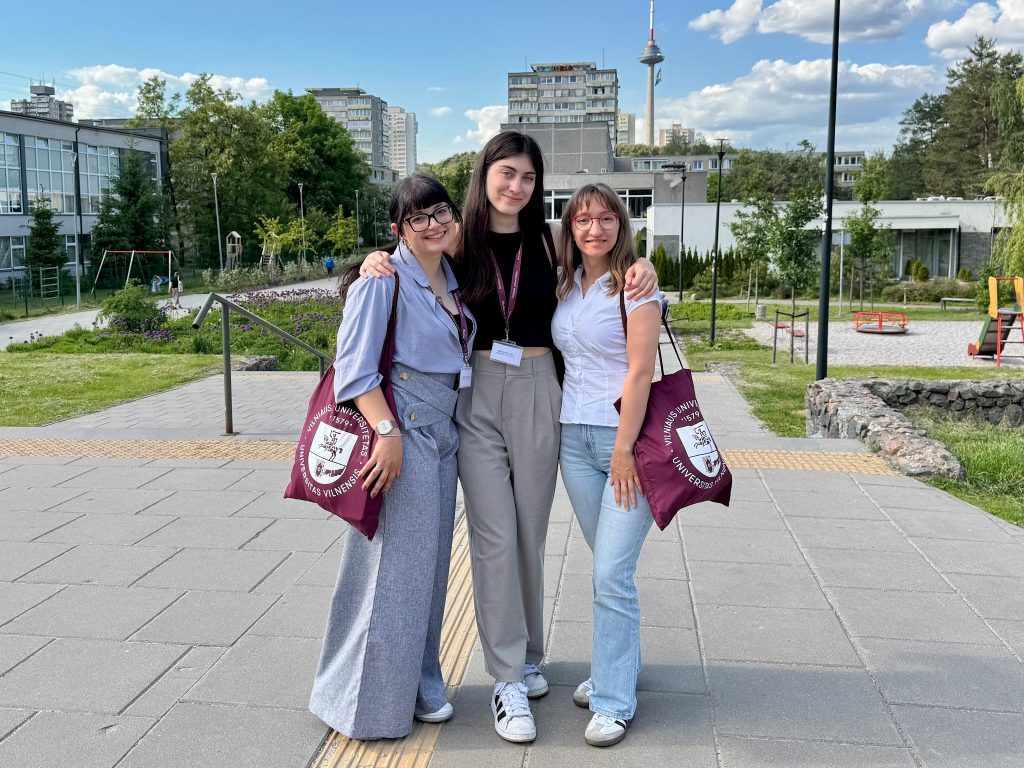
“Seeing the socialist architecture analysed in class made the concepts tangible and revealed their complex legacy. Being part of the Arqus Alliance made me realise how lucky we are to participate in such impactful initiatives.” – Anastasia Donatelli (left), Arqus Ambassador at the University of Padua.
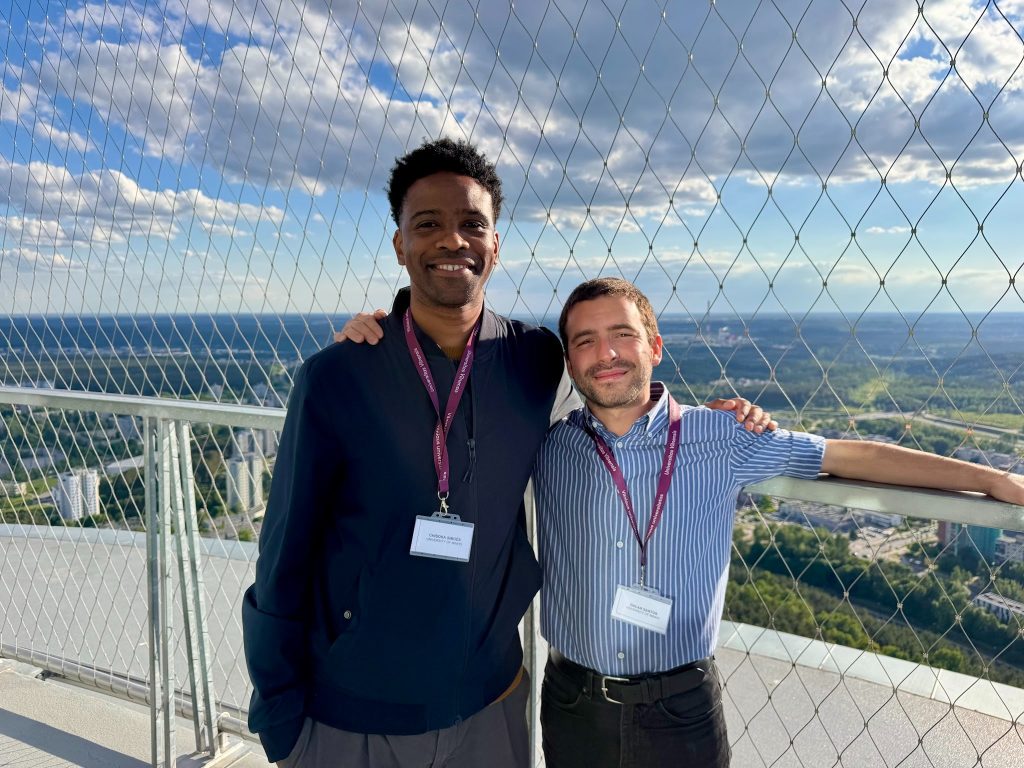
“My highlight was seeing both tensions and convergences in interpretations of 20th-century Europe shaped by authoritarian regimes. Coming from Portugal’s imperial, colonial, and fascist past, I reflected on the hegemonic effects of different regimes, including communist ones. In a few days, we exchanged problems and tools – and possible solutions – confirming both the scale of our tasks and that Europe’s cultural dissonances remain a shared challenge.” – Chisoka Simões (left), doctoral researcher at the University of Minho.
The third and fourth day focused on post-Holocaust landscapes, combining introductions by researchers from PAScapes with fieldwork at the Vilnius Ghetto and the Lost Stetl Museum in Šeduva – sites where the traces of Jewish life remain both present and frequently overlooked.
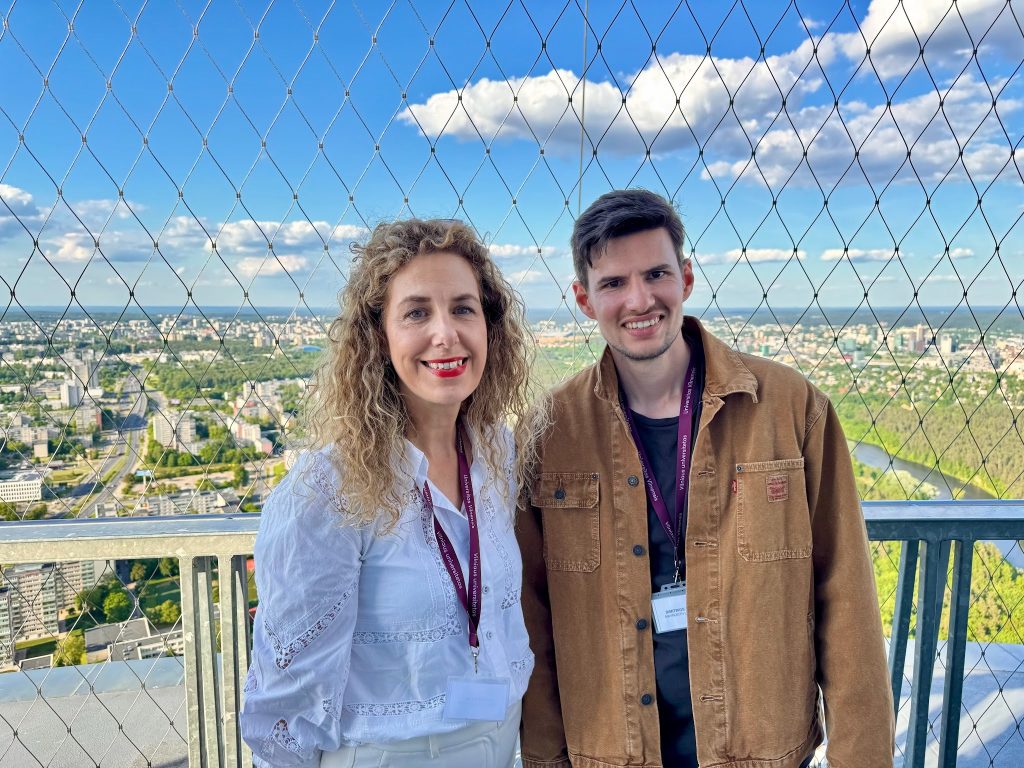
“As a Holocaust researcher, experiencing these sites firsthand deepened my understanding of how memory, landscape, and heritage interact. Walking through spaces where traces of Jewish life remain visible yet often overlooked prompted me to reflect on remembrance, commemoration, and the ways difficult histories can be both present and hidden.” – Dimitrios Roupas (right), doctoral researcher from Maynooth University.
The week concluded with a roundtable on “Critical Heritage Studies – Future Pathways in Cross-Regional Perspectives”, led by Dr Steffi Marung, Prof Marija Drėmaitė and Dr Janine Kläge, which brought together the threads of the preceding days and opened new ones.
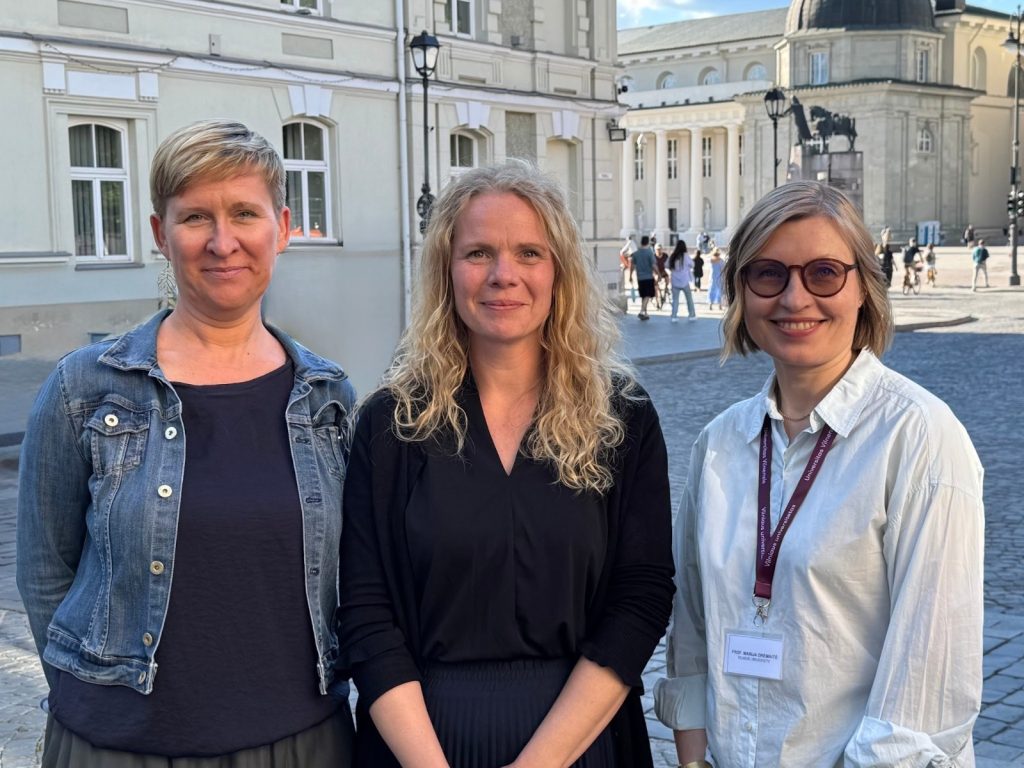
“Lectures, discussions and excursions revealed just how important historical memory and heritage sites associated with a traumatic or unwanted past were, and how characteristic they were of all European countries. Every country and region experienced events in the twentieth century whose memory was complicated and changed as political regimes changed.” – Prof. Marija Drėmaitė (right), Professor in Architectural History and Cultural Heritage at Vilnius University.
The Spring School demonstrated something that goes beyond its own programme: The Arqus Alliance is built on the premise that the diversity of its members’ histories is not a complication to manage – it is at its very core. The universities that make up Arqus bring a unique combination of historical experience to the table: post-socialist and post-fascist legacies, post-colonial heritage, and the overlapping perspectives of institutions that have themselves lived through historical ruptures that European heritage discourse struggles to accommodate. Bringing them together creates conditions for exactly the kind of critical, comparative conversation that took place in Vilnius: in historic seminar rooms, on busy street corners in residential areas, in the silence of the former Vilnius Ghetto and on a bus to a small Lithuanian town where an entire Jewish community was brutally erased 85 years ago.
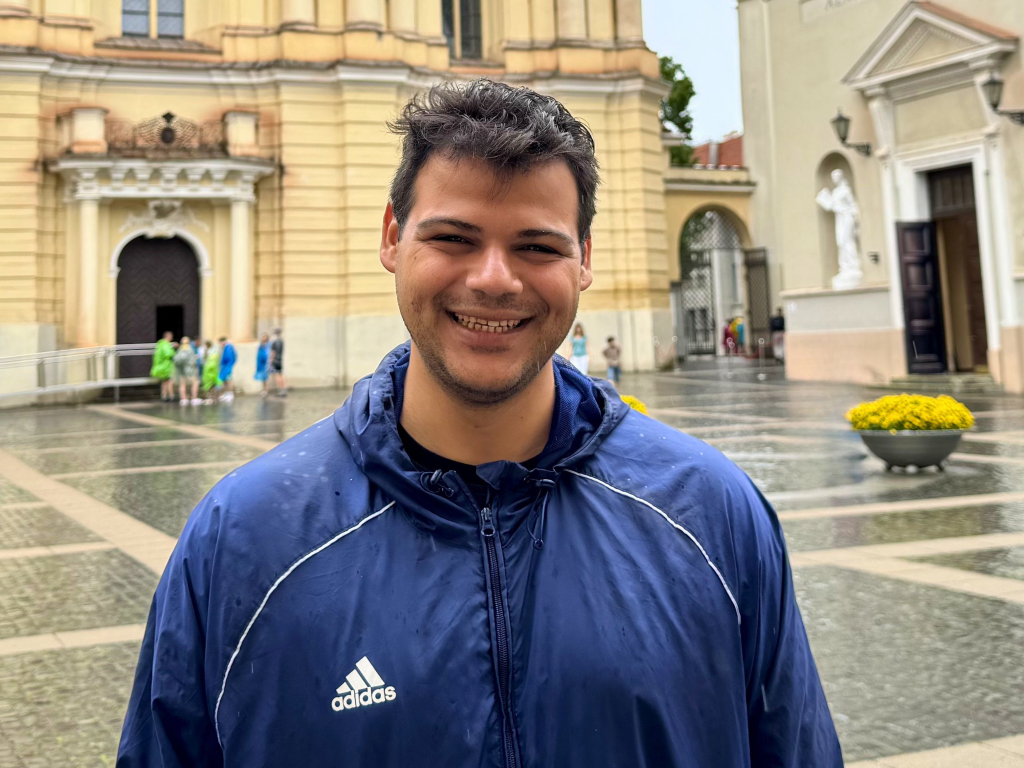
“Personally, the most rewarding part was discussing these ‘contested landscapes’ on-site with international colleagues – this empirically showed me that European identity is not a static concept, but a continuous dialogue shaped by how we interpret these physical symbols of history.” – Samet Kayar, doctoral researcher and Arqus Ambassador at the University of Wrocław
Europe’s heritage is vast, layered and far from settled – and the Spring School in Vilnius was only one chapter. Building on the discussions and student input gathered throughout the week, the Arqus Working Group is already planning other joint teaching formats on cultural heritage. The pool of sites, stories and perspectives still to explore is, as the week made clear, effectively without limit. The work has only begun.

Article and pictures by Steven Rupp