Join the Arqus MOOC on Cybersecurity for citizens and professionals
Arqus
|
26 Feb 2026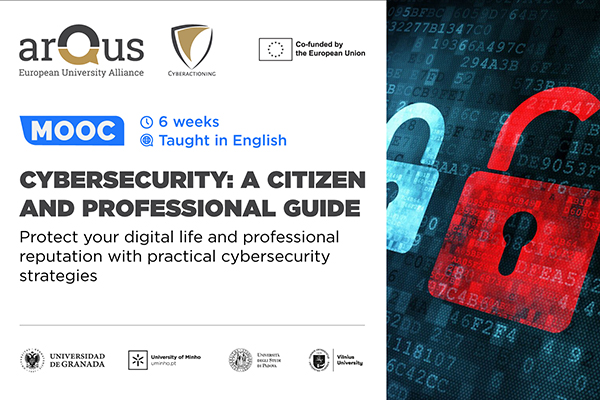
|
26 Feb 2026Arqus has launched a new Massive Open Online Course (MOOC) titled “Cybersecurity: A citizen and professional guide”, now freely available to learners worldwide. Designed to equip both general public and professionals with essential digital security skills, the course reflects the Alliance’s commitment to digital empowerment.
Developed within the framework of the Cyberactioning Project, a European initiative co-funded by the Digital Europe Programme, the MOOC aims to broaden cybersecurity awareness beyond specialist audiences. Coordinated by the University of Granada with contributions from partner universities and industry experts, the course offers practical guidance on protecting digital environments in both personal and professional settings.
The six-week, fully online course is taught entirely in English and open to anyone with an interest in cybersecurity – from everyday internet users to employees working in IT, education, finance, healthcare and beyond. Participants will learn key concepts such as data protection, risk management, threat mitigation and how to identify vulnerabilities in digital systems.
Interactive materials, including videos and quizzes, will help learners understand real-world cybersecurity challenges and apply best practices to enhance their own digital safety. Upon completion, participants can apply their knowledge to create tailored security strategies for personal and workplace use.
Certificates of completion are available for those who fulfil assessment criteria through the platform. The course also forms part of Arqus’ broader efforts to strengthen digital skills across Europe and support inclusive access to quality education.
This page includes content developed within the framework of the CYBERACTIONING project (Digital Europe Programme, Grant Agreement No. 101123445). Co-funded by the European Union. Views and opinions expressed are, however, those of the author(s) only and do not necessarily reflect those of the European Union or HaDEA. Neither the European Union nor HaDEA can be held responsible for them.

14 Sep 2026