Arqus Ambassadors share their thoughts and insights at the Arqus Annual Conference 2026
Arqus
|
29 Jul 2026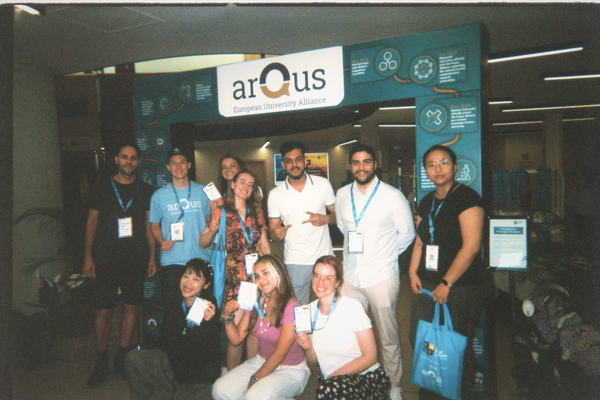
|
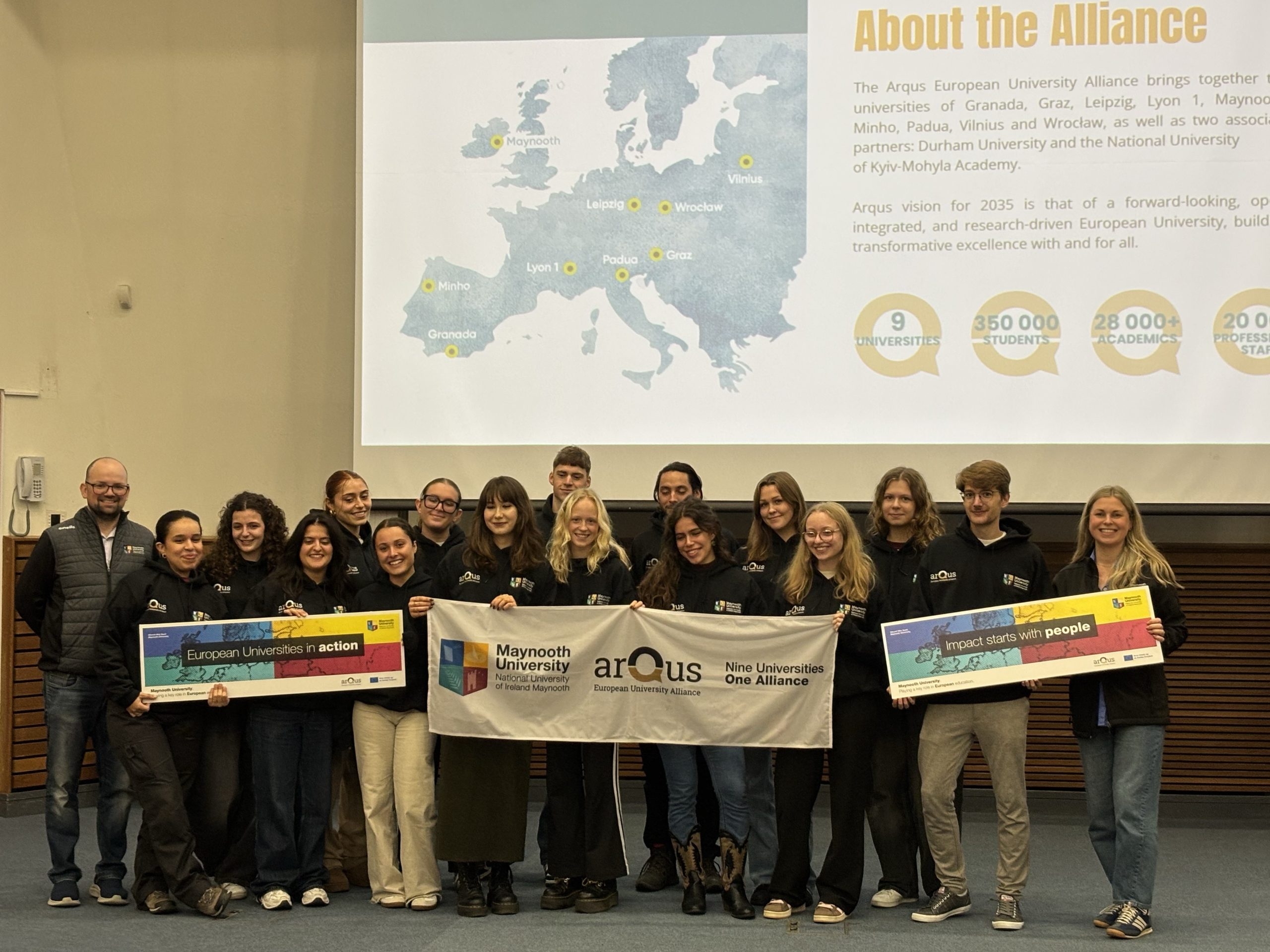
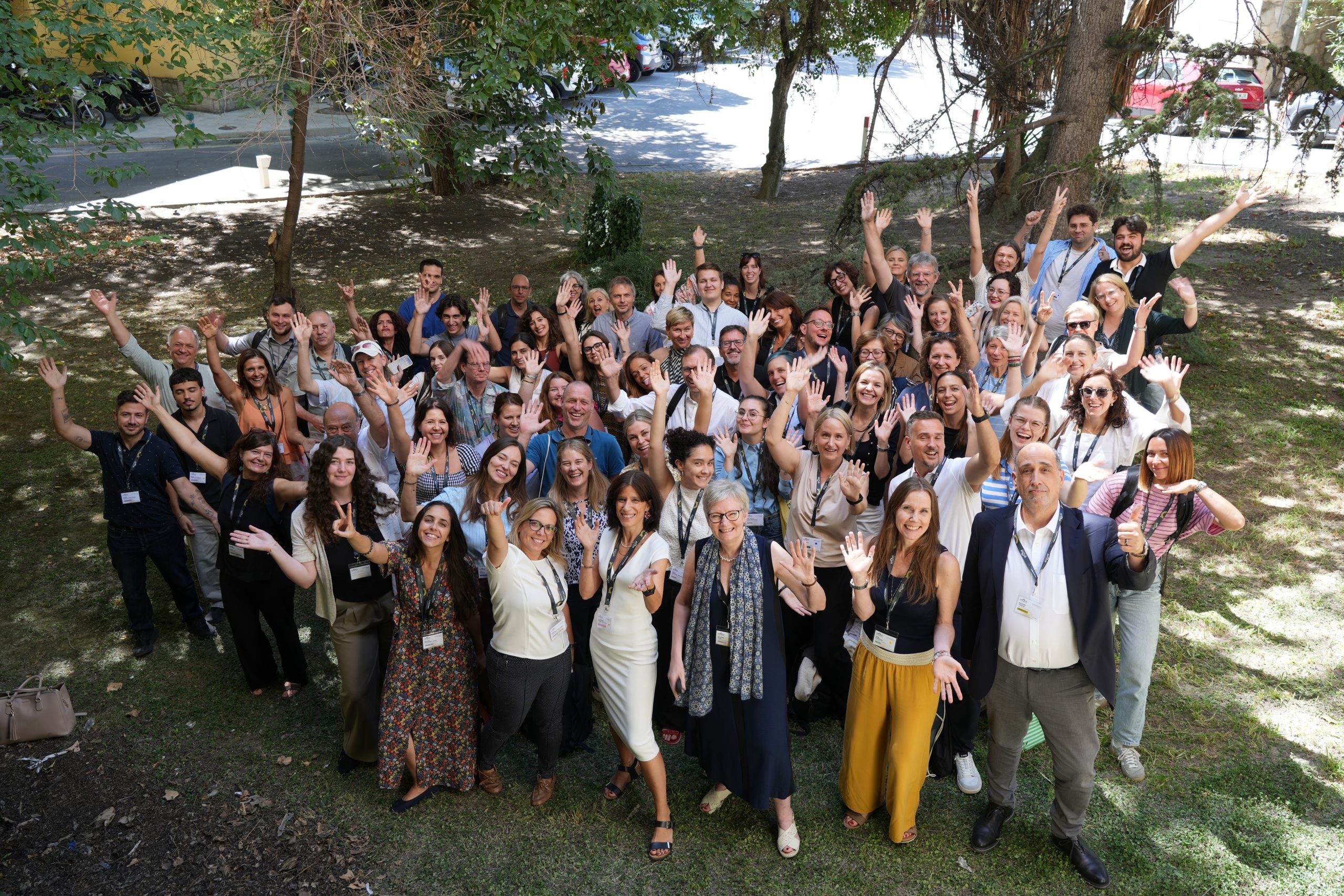
29 Jul 2026From 7 to 9 July the Arqus annual Conference brought together students, academics, professionals staff and stakeholders at Maynooth University to reflect on how the alliance continues to create impact across institutions, communities and borders, under the them “Voices of iMpact: Weaving Stories Across Europe”
What a best way to go under this theme than to hear the stories and insight of two Arqus Ambassadors that were there discovering the Alliance’s achievement’s, goals and challenges. Students that had the opportunity to live the Arqus Alliance from its core meaning of building bridges and connecting people
“Yesterday’s impressive choir performance truly symbolized what Arqus stands for“- these words of Dorothy Kelly at her last conference as Arqus Coordinator, stuck with me. How can a choir performance represent a complex organizational structure that is the Arqus Alliance? During the performance, conductor Michael T. Dawson further specified the metaphor: “This performance is what Arqus stands for: collaboration, cooperation, and international friendship.“ But this left me wondering, how did these different aspects come into play outside of the choir performance?
English not being my native language, I had to make some research to truly distinguish the meaning of these two concepts. Cooperation is helping each other to achieve a shared goal, while collaboration signifies a deeper co-creation of something new. Collaboration is where symbioses form and where divisions between teams are slowly fading. The choir first displayed a cooperation, since each of the six choirs was performing their own songs in different styles representing their own universities. However, in the second part of this outstanding concert in the College Chapel, they all came together, accompanied by the Maynooth University Orchestra, to collaborate: It was suddenly apparent that the goal was no longer to only entertain, but ultimately convey the message that in unity and exchange relies a value far greater than expected.
I could definitely witness a similar evolution in the interactions among the delegates and overall atmosphere over the course of the conference. For me, as for many others, it was their first Arqus conference and therefore naturally at the beginning everybody spoke mainly with the delegates of their own university in their mother tongue or, to stay in the music metaphor the choir of the delegates stayed in the known key… But over time the key was modulated as the working groups which usually work together online met in person, as the plenary sessions pointed out common goals and as new ideas were making their way into the conversations between delegates who had never met before. Finally on the second day, as was very visible during the Arqus Awards, the Irish Céilí Dancing Demonstration and the closing session everyone had found a common key. People were not only inspired by great ideas, but also found a common ground to dance, share ambitions and summarize the past days in unison. Even more fitting to this harmony was the fact that the Arqus Bridge project was approved by the European Commision for the next funding period 2026-2028.
But how does our shift from cooperation to collaboration translate back to the all of our individual routines, especially given the distance between all 11 universities? How can the melody continue? The corporate answer would be: personal bonds enable continuous networking with colleagues to further project-enhancing effects. To put it simply: The international friendships formed at this conference produce an unique energy that gives the Arqus melody a new direction and carries it until next year’s
conference in Lyon.
The rectors are working on elevating Arqus to the next legal step and the new Arqus Coordinator Guadalupe Soriano is already starting her work. I am also sure many other projects have been developed and that we will soon get to know their melodies, perfectly fitting and contributing to the flourishing concert that is Arqus.
(As for the choir, there is strong evidence on the Arqus Instagram suggesting they certainly
have concrete ideas for what Arqus future sounds like).
This text was written by Paul Juhle, from the University of Leipzig, and edited by Hanaa Bechara from the University of Lyon 1.
The first thing that caught my attention the moment I stepped out of the plane were the information and way finding signs in Irish and English, especially the one I saw just as I set foot in the terminal which read: “Fáilte go hAerfort Bhaile Átha Cliath/Welcome to Dublin Airport”.
Shortly after the cultural shock of coming across a language with so little resemblance to my own, I started noticing that the linguistic aspect wasn’t the only difference. No, for everywhere I looked there was something green. Trees, grass, plants, even the buses. Everything was green or brown, almost reddish, like the buildings. Such vivid colours had nothing to do with the pale yellow of the dried lands back home.
When we finally got to Maynooth and checked in, we went to the TSI building for early registration and as we were inching closer to the crystal doors I felt something tighten in my chest. Just like what had happened earlier in the day with the green colour, now everything I saw was Arqus. In my lanyard, in my ID card, in the tote bag I was given, in the posters. Arqus was everywhere and somehow that made me feel, for the first time in my almost five-hour journey, home.
It wasn’t because Ireland had stopped being another country. It wasn’t because I had stopped being myself. It was because despite everyone coming from a different corner in Europe and beyond, despite representing different universities and cultural values, despite speaking different languages, we all belonged to one big and international family: Arqus.
If there was anything that stuck with me during the opening ceremony, it was the Irish song played with a harp and the Irish poem of Seán Ó Ríordáin “Fill Arís”. Because it reminded me of the conclusion I reached during the arrival day: that being proud of the characteristics that make a nation unique, doesn’t mean that unity and collaboration are impossible. After all, as Eeva Leinonen, president of Maynooth University, stated:
“All universities have their particular strengths, but they’re all united by Arqus and through excellence; inclusion and partnership the alliance helps to build the future of Europe and contributes to the betterment of society”
The first plenary session Personal Impact; Journeys of Change: Personal Stories from the Heart of Europe deeply moved me, because it showed me real examples of how alliances like Arqus and the EU itself aren’t just concepts, but organisations made up of people like Sharon Ferguson from the EU Green Alliance, who are very conscious of how necessary it is to build bridges instead of walls and barriers. Because as Sharon herself said:
“The fact that the EU stepped in to help after the destruction of the bridge and the conflict in Derry, Northern Ireland, mattered because it showed that they cared about who we were and who we could become. If it weren’t for the people that fought for us, I wouldn’t be here”
This first session taught me that connection matters the most in uncertain times and that to protect the bridges between countries, universities and people; we need to have the courage to meet people from different places and find common ground. Because as the EU motto says we’re “united in diversity”.
As for the second plenary session Institutional impact; Redefining the University: Institutional Transformation Through European Alliances, I learnt that for European universities to compete with other higher education institutions all over the world we need alliances like Arqus to, as Eva Inés Obergfell, rector of the Leipzig University, said:
“Reconstruct the old model of cohesive university into an interconnected model by sharing responsibilities with like-minded people and knowing that combining our strengths won’t mean a loss of identity if we never forget what unites us: trust, vision and acceptance”
It also taught me that European collaboration helps the local universities improve through Arqus in concrete ways, most of the time by creating helpful measures in one university and then implementing that initiative in the other universities as in the case of Maynooth University’s Milo (an intuitive user friendly site to support students’ study skills with interactive activities, quizzes, eBooks, etc) and the University of Lyon 1 which adopted the programme too.
If I were to take one thing with me from this session is what Fernando Galán, EU-CONEXUS executive director, said during the Q&A panel to the question “How can we make international mobility easier for the students and help them have a sense of belonging to Europe and Arqus?”:
“National and international identities are not exclusive. A student can be part of LeipzigUniversity and also part of Arqus”
From the last plenary session of the day Systemic Impact; Universities as Policy Shapers: Driving Change Through European Alliances I take that, although Arqus still has aspects to improve concerning long-term sustainability; strategic use and diversification of funding, it has proven and created significant changes through what Suzzane Conze, head of Unit for Higher education in the Directorate General for Education; Culture; Youth and Sport of the European Commission, said was the strongest asset of the alliance: “Experimentation to create policies and diversity of approaches to create new things”
The most important achievement of the alliances and especially of Arqus, which was heavily involved in the process, was the creation of European degrees that, just like the Erasmus+ programme did with international mobility among students, is working towards normalising highly competitive and attractive joint degrees across European universities with a universally recognised diploma and more opportunities to study at various universities in different EU countries. To put it simply, as Josep María Garrell, president of the European University Association (EUA) said: “Alliances create impact and community”.
If I were to take anything with me back home from this session, it would be the inspiring words of Caroline Censier-Calmus from the French Ministry of higher education, who stated:
“Through trust and solidarity, European university alliances breathe life into the European Union values: academic freedom, EDI, skill development and democracy. They train global citizens that help protect our shared humanity”
Strength through unity in diversity. Humanity as compassion, collaboration and understanding. Change brought by democracy, trust and solidarity. That was the EU. That was Arqus. That was all of us. Her words made me realise these important core values on which I had been dwelling during the sessions without really being able to pinpoint them clearly, and if I needed any demonstration of how much they meant and could achieve, I was shown conspicuous evidence of it all during the choir’s magnificent and absolutely enthralling performance in the Chapel of St Patrick’s College. Joint choirs from six Arqus Alliance universities, yet singing with one voice. Hundreds of people present yet one heartbeat. Multiple nations represented yet unified by one reason: the alliance. Arqus was everywhere and Arqus meant home.
During the final day’s last plenary session: External Stakeholder Impact; Beyond Borders: European Universities and Their Societal Footprint I had the chance to understand that Arqus is more than just an alliance of universities, for it contributes not only to the development of European higher education but also to society and its global challenges.
Ricardo Araújo, mayor of Guimarães, brought evidence of how the University of Minho helps generate industry and economic value for the region. Piotr Kepski, director of institutional programmes NAWA, explained that European universities, through Polish universities as diplomatic intermediaries, helped support Ukrainian universities. In the case of Arqus, by giving grants and creating summer schools and study visits at other Arqus universities thanks to the mediation of the University of Wrocław.
After lunch and a rather “blissfully relaxing” session of Irish dancing (it was more like a cardio do or die situation, but it was entertaining to have a taste of Irish dance. After all, not always does one get the chance of learning from a native and dare I say very passionate teacher), I had the life-changing chance of attending the EDI session: How Do We Make Arqus More Inclusive? coordinated by WG04 Arqus Student Agora and Maynooth University Arqus staff from WG10 Inclusion and Diversity Hub. During the workshop I learnt from the Maynooth University students invited by the WG10 that those most in need of support and social justice are exactly the very ones to give the most thoughtful advice on how to proceed when we want to make Arqus more compassionate and more human. I was truly honoured and grateful to have the opportunity to be in their shoes, if only for 2 hours, and appreciate their way of coming up with solutions to make international mobility in Arqus more accessible by placing at the heart of their decision-making not the people in general, but each individual and their special circumstances.
If I had to wrap up my experience at the Arqus Annual Conference 2026 and bid you, dear reader, a heartfelt “slán, slán, slán”, I’d do so with the words of Dr. Dorothy Anne Kelly, coordinator of the Arqus Alliance:
“Arqus is a family with which we’ve all decided to build a future together”
This text was written by María Shang Ruiz Ortega, Arqus Ambassador from the University of
Granada (UGR)